

What to see and visit in Herceg Novi
Get to know Herceg Novi in the right way
Table of Contents
The rich monumental heritage in the area of Herceg Novi was created as a result of the permeation of various peoples and cultures that have changed and collided here throughout its long history. The old town is a unique architectural unit, intersected by narrow streets and stairs. Because it lies on cascading terrain, Novi has more steps than “real” streets, so over time they have become a symbol of the city. Each staircase has its own name and story. Attractions are Kanli Kula, the source of Nemila, Kotobilj kod sung in “Gorski vijenac”, the house of Ivo Andrić in Topla, turned into a restaurant of the Writers’ Club, a place in Meljine, where Bishop Nikolaj Velimirović lived, Savina Monastery. Above Škver, the main port, stands the fortress of Forte Mare, which was built in 1382 by the city’s founder, the Bosnian king Tvrtko Kotromanić. If you want to get to know the local culture and art, climb the Square, which is reached by numerous stone steps. What is little known is that Petar II Petrovic Njegos finished his primary education in Herceg Novi, and a museum of the Njegos School was opened in that part. Herceg Novi is also known as the City of Poets. Andrić said that this city of stairs has a special soul because here magic can always be experienced again and again. What we are extremely glad about is that our apartments are located next to the house of our famous Nobel Prize winner Ivo Andric.
In this regard, we would start our “journey” from the Writers’ Club.
The house of Nobel laureate Ivo Andrić
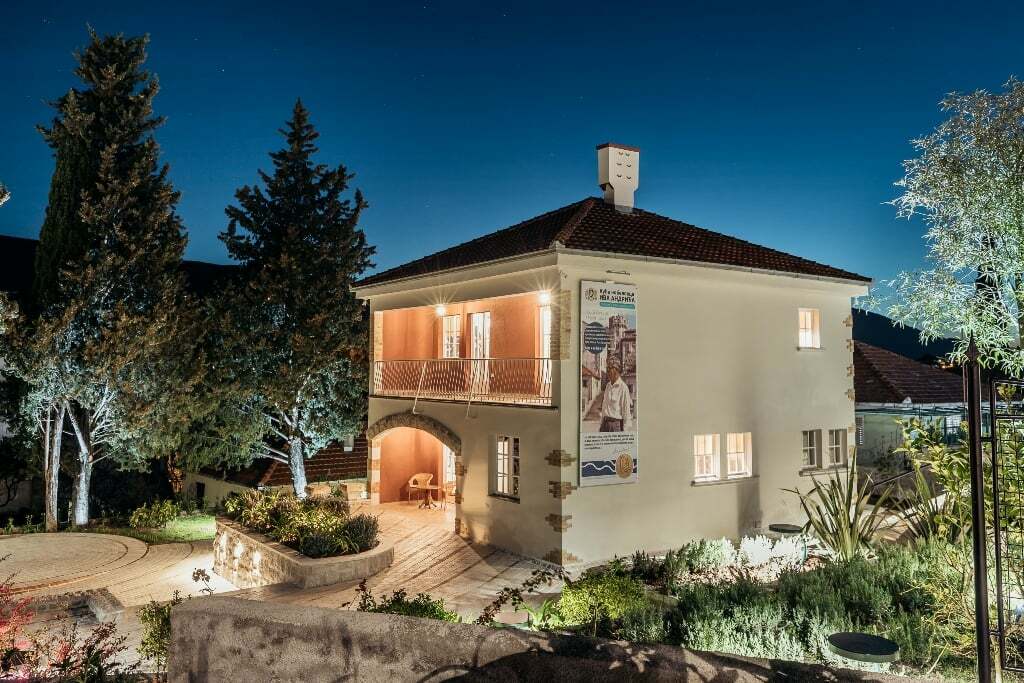
IVO ANDRIĆ – won the Nobel Prize for Literature in 1961, which is why it can be said that Herceg Novi is, in a way, included in the list of cities that can be proud of the Nobel Prize winners. Andrić lived in Njegoševa ulica no. 65, on Topla, which is still called the House or House of Ivo Andrić and has his memorial room, and is also known as the Writers’ Club and in which the Literary Community was active for several years. she worked as a restaurant for several years, while last year the city municipality decided to renovate the building and open a museum.
Museum of Mirko Komenović
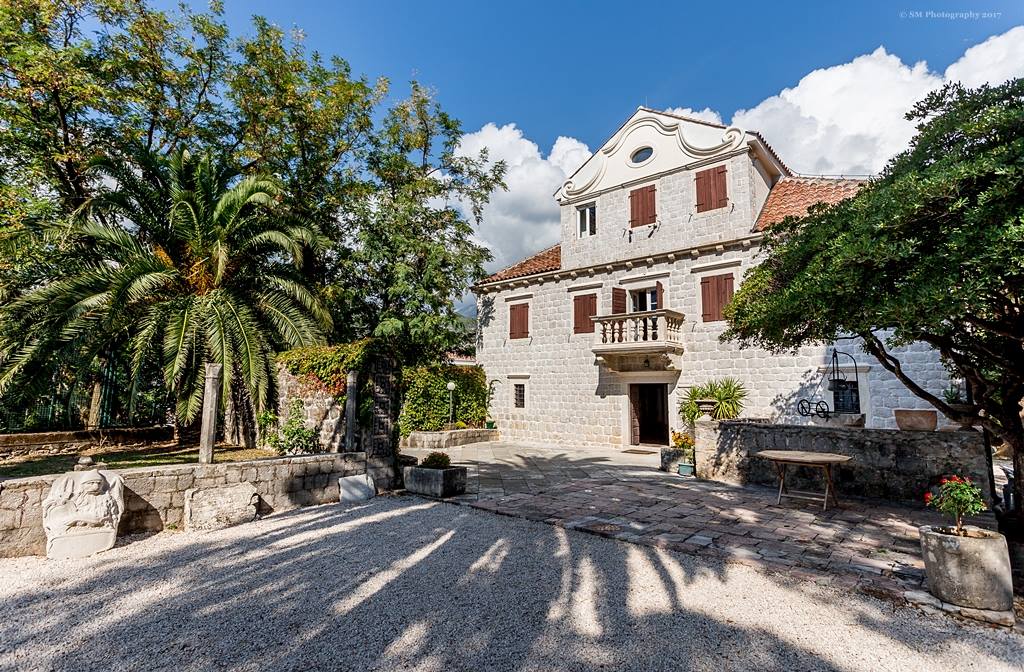
Immediately after the Writers’ Club, there is a beautiful museum by the former mayor of the city, Mirko Komenović. Only the building and the location will immediately leave you breathless. The view of the promenade is amazing!
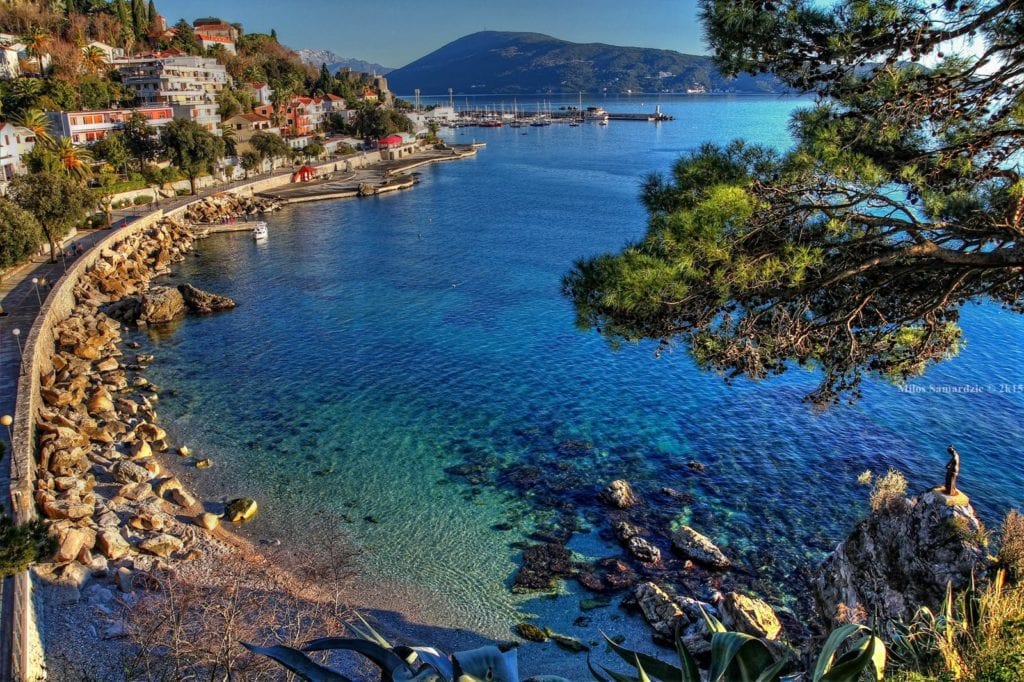
The house was built in the late 18th century. in the Baroque style. The appearance changed in the 19th century. pseudo-baroque extensions and additions. Under the small balcony is a door with a bayonet engraved with the names of Russian soldiers from 1807. The city museum keeps a historical, archaeological, ethnological collection, and a collection of icons. The work of the Boka Kotorska icon-painting school Dimitrijević-Rafailović from Risan, which existed in the 17th, 18th and 19th centuries, has been preserved, and whose icons emphasize the influence of Byzantine art. One of the most significant is the icon of the Apostle Thomas from 1833, recently proposed to be categorized as a cultural asset of national importance. After satisfying your desire for art and history, in the beautiful botanical garden of the museum, surrounded by rare plants, you will enjoy a stunning view of the sea, thanks to the selfless desire of spouses Mirko and Olga Komnenovic to open the doors of their home to all well-meaning visitors. .
Boka Park

The next thing you should pay attention to is the park from the once most beautiful hotel in Herceg Novi, Hotel Boka. The hotel itself was demolished after the 1979 earthquake.
What the people of Novlje love in this park, and all tourists, is an oasis of peace and nature, with a beautiful view of the Bay of Kotor.
Not far from the park there is the City Tavern,
with the most beautiful terrace in Herceg Novi.
A cult place.

Clock Tower

Walking straight through Njegoševa Street, you come to the main square of Nikola Đurković and the symbol of the city of Herceg Novi – CLOCK TOWER.
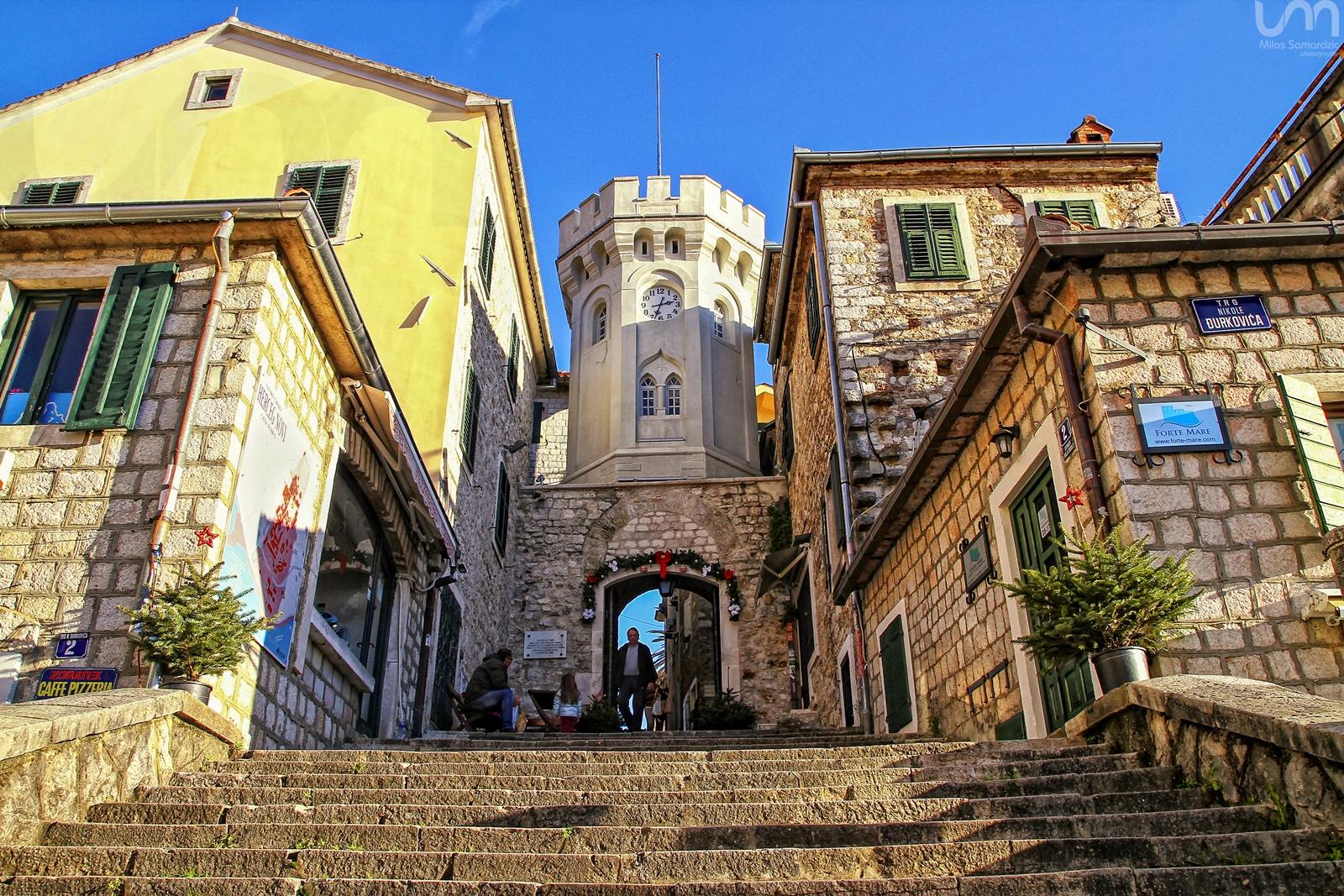
The tower was built in 1667 by order of Sultan Mahmud. During the Turkish rule, there was a mosque next to the tower. The clock tower has a mechanical clock on several sides, which showed the time of daily Muslim prayer. In addition, the tower served as the main gate of the city. used in the city flag and on all kinds of tourist accessories. The tower has become a trademark of Herceg Novi. There are also other names for the tower: Torah, Clock Tower or simply the Clock Tower.
In 1753, the Russian Empress Catherine II presented the citizens of Herceg Novi with a bell, which has been preserved to this day. Inside the tower there is a unique relief that deserves special attention. This is a sculpture of the Mother of God, called “BLACK MOTHER OF GOD”, which is made of burnt wood.
The monument is dedicated to the founder of Herceg Novi – the Bosnian king Tvrtko I.
In 1995, the old city clock was replaced with a new one – an electric one, donated by Zemun. The tower has a preserved city archive,
where there are historical documents from 1685.
Belavista Square

When you go up the stairs through the symbol of the city SAT KULU, you come across another “main” square, Belavista Square or, as its formal name reads, Herceg Stjepan Square. Belavista Square is dominated by the Orthodox Church of St. Archangel Michael, unique in its stone iconostasis. The Old Town Square is a real architectural medallion! Everything is there, in a small way: a church in the Byzantine style with elements of the Orient, the city Archives, the Library, the art gallery, etc. Down the stairs you reach the Catholic churches of St. Jerome (with a rich treasury) and
Sv. Leopold Mandić (originally from Novljan).
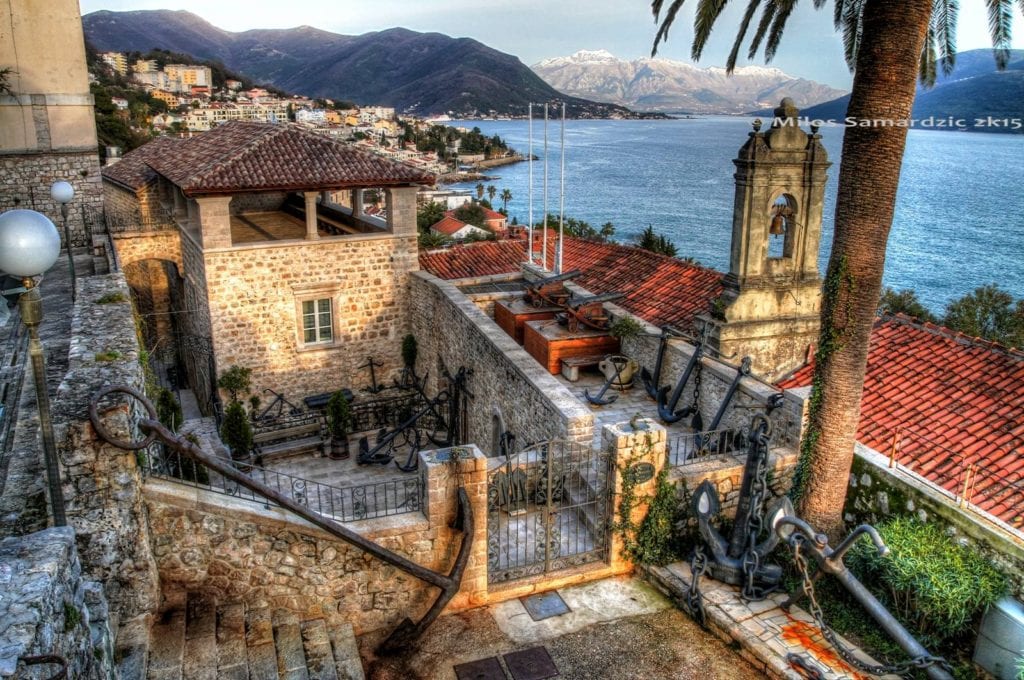
The music school is on the same cascade level.
Forte Mare

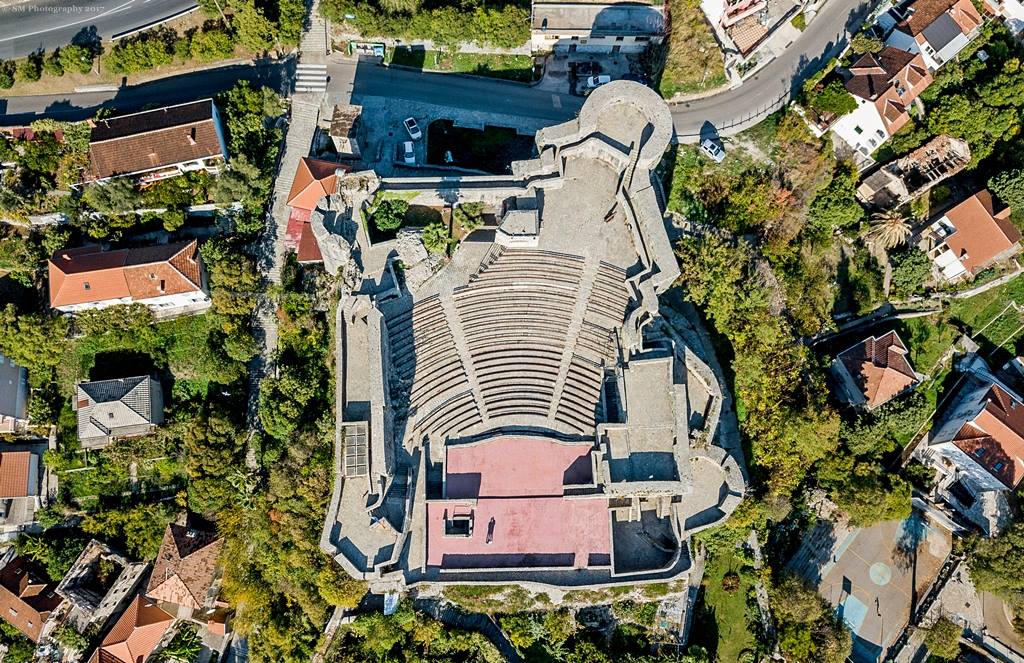
Down the stairs, as you descend towards the Pet Danica promenade, you come across the best-preserved Herceg Novi fortress, which is built on a steep, stone cliff above the sea.
It represents the beginning of a medieval town founded by the Bosnian king Tvrtko in 1382 and around when a larger settlement was formed later, during the reign of Herceg Stefan Vukčić Kosača. The fortress has changed its appearance over time, and from the oldest Bosnian period, one part of the wall on the southeast corner of the fortress and a narrow, high staircase with an entrance at the bottom of the eastern rampart have been preserved today. The fortress offers a beautiful view of the entrance to the Bay of Kotor, the City Port and Igalo and the Old Town. For more than six decades, the screening of films has been organized at the fortress during the summer, and it is, according to many, one of the most beautiful and oldest open-air cinemas. On the marble slab above the spring, the most beautiful verses are carved, dedicated to the Bay of Kotor, verses by the poet Aleksa Šantić from 1906. “Our dear Boko, the bride of the Adriatic…” Forte Mare Fortress in the summer also serves as a summer cinema under open skies.
Kanli Kula
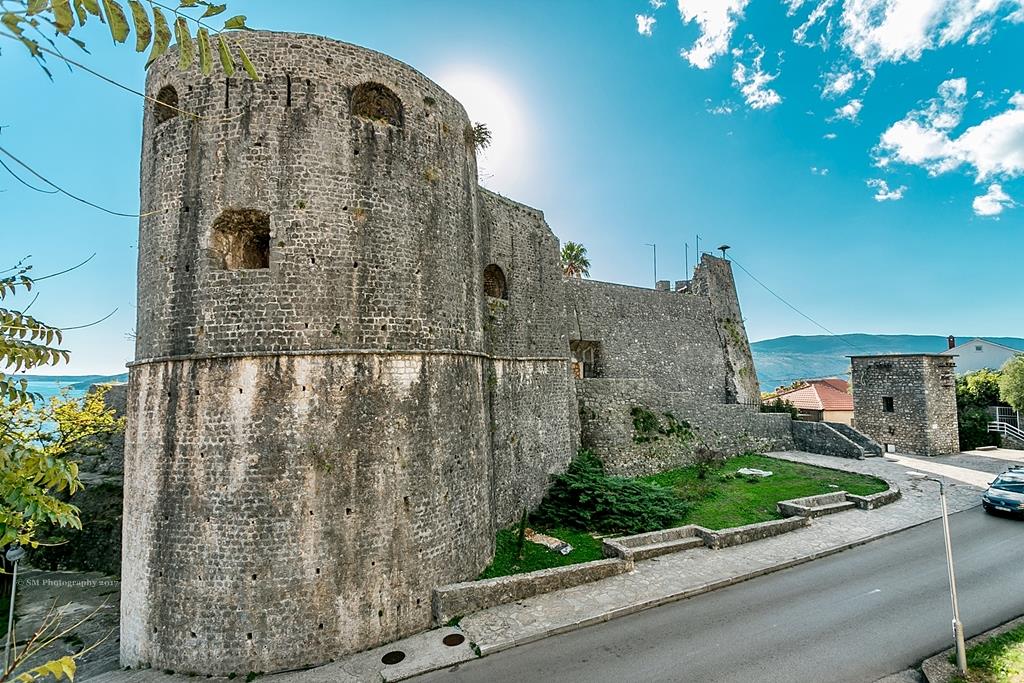
The next fortress we come across is KANLI TOWER. The fortress was built by the Turks after 1539. It was built on the site and foundations of an earlier fortress.
In its current size, it is the work of Turkish builders and has preserved for the most part the authentic architecture of the time.
The very name Kanli Kula from the Turkish language when translated, means Bloody Tower. This “bloody” name of the fortress was not accidental, because for many years it was considered not only as a defensive fortress. The size of the Kanli Kula fortress amazes the imagination of tourists and stands out among other buildings in the city.
The inner square of the fortress is 70 × 60 m, while the thickness of its walls in some places exceeds 20 m. What you probably know is that the view from the top of the tower itself is amazing!
In the summer, concerts and theater performances are often organized. It is certainly a unique experience that you must see.
Spanjola
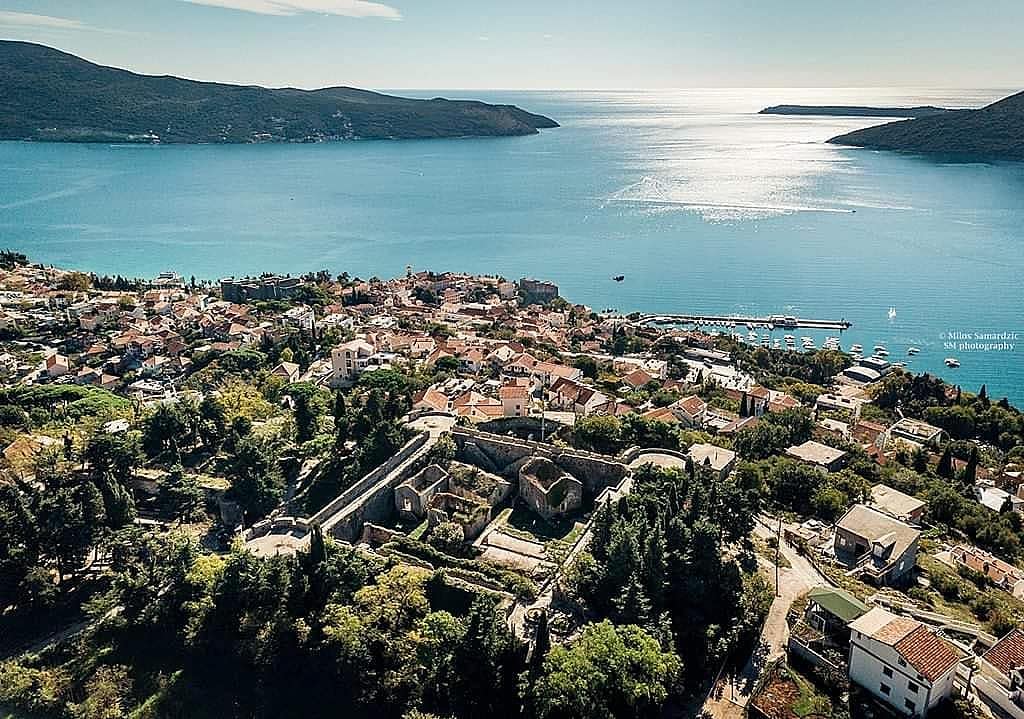
When we mentioned Kanli Kulu and Forte Mare, it is time to mention the SPAIN FORTRESS. It is located on the highest hill in Herceg Novi, called Bajer. Located on the northwest side of the city at an altitude of 170 meters. It offers a wide view of the vast territory, so throughout its turbulent history it has played a major role in the defense of the city. An interesting fact is that in official documents, the fortress is called Gornji Grad.
Outside the bastion, the Spaniard looks very impressive, although there is almost nothing left in the fortress itself, it is definitely worth a visit. In addition to the amazing view of the surroundings, the fortress can offer a kind of journey into the past. Here you can still see ancient barracks, shooting ranges and various auxiliary facilities, touch the strong walls and military installations that are currently in the power of nature (ivy, grass and trees) and disappear before our eyes, but still retain the rebellious spirit of old times.
Spain was built by the Turks, not the Spaniards, as many believe. In 1538, the Spaniards briefly conquered the city and, realizing the strategic importance of the fortress, rebuilt its ramparts. On the site of today, there used to be the fortress of Charles V, which the Turks demolished only a year later and built a new fortification on that foundation. The inscription on the fortress also testifies to that: that it was built, by the Sultan’s order, by Suleiman, the son of the great emir Suleiman Khan.
Pet Danica promenade
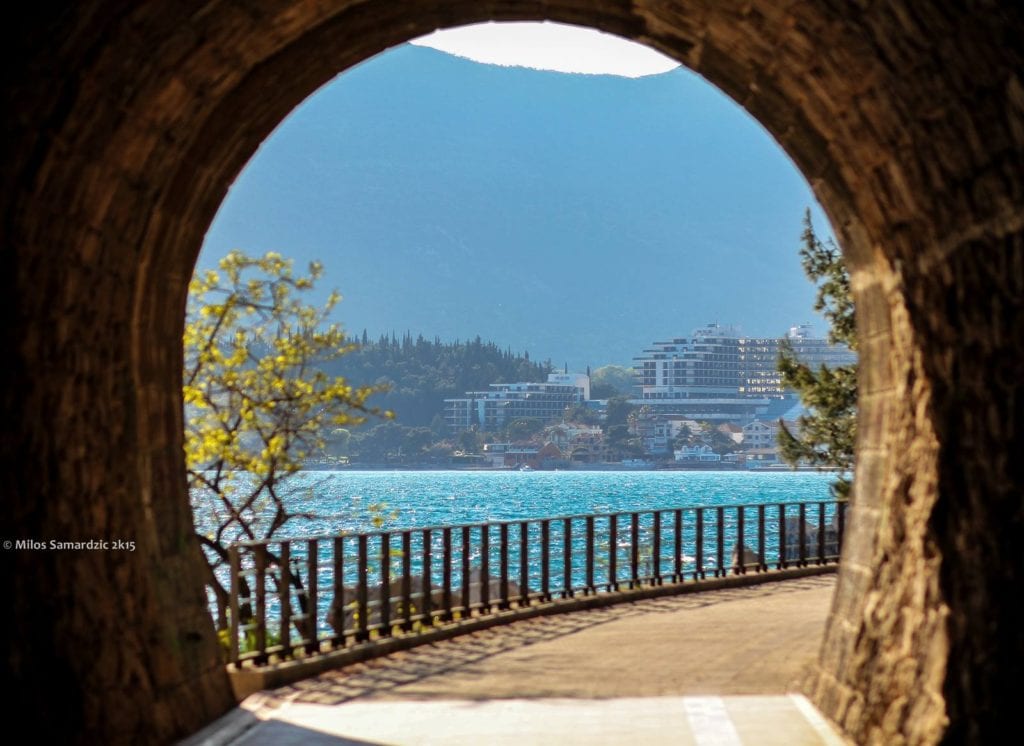
Descending down the stairs (for which Herceg Novi is otherwise known)
we come to the promenade PET DANICA.
It is 6 kilometers long and stretches along the sea from Igalo to Meljine.
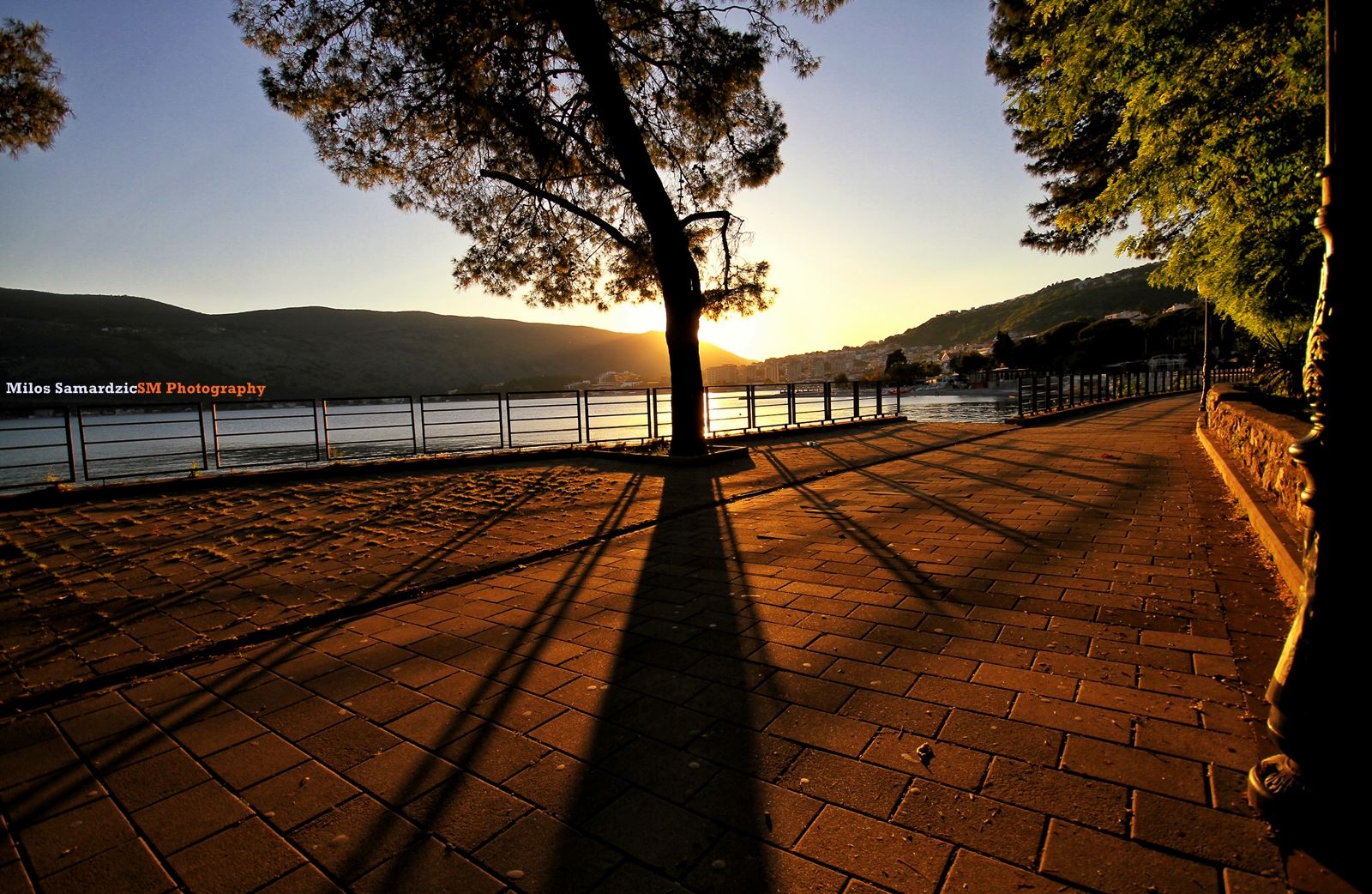
The promenade was named after Pet Danica, five young girls who fought bravely and died in World War II. In our case we arrived below the Forte Mare fortress and to our left are the remains of the Citadel fortress.
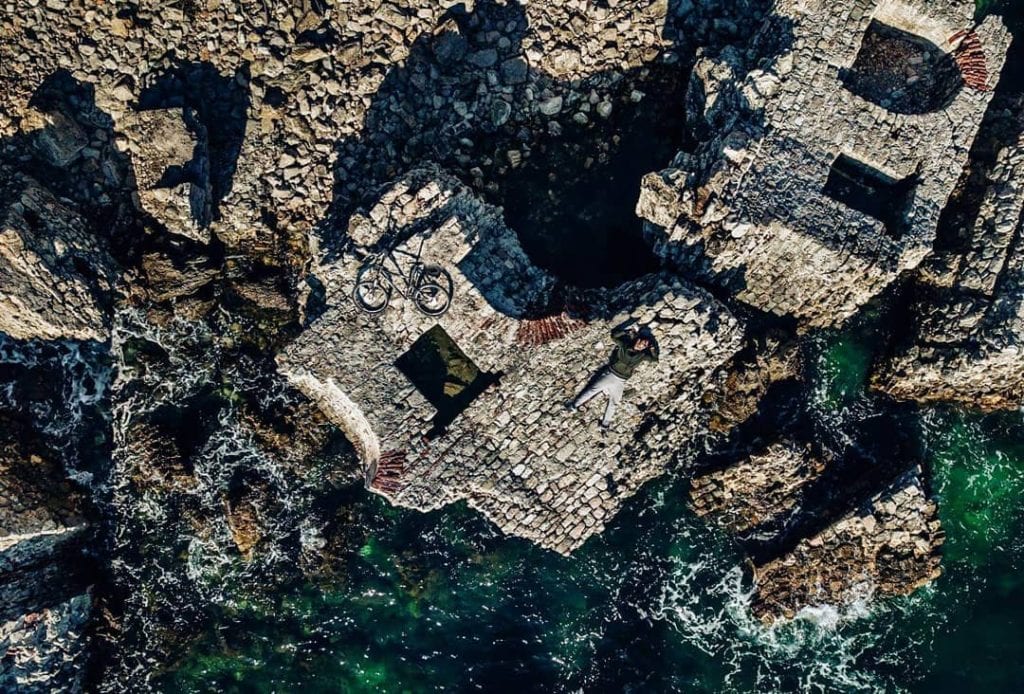
The citadel with the Forte Mare fortress gained its main defensive character as a fortress by the sea, and the tower has walls built during the time of various invaders. It is in its foundations that the beginnings of Herceg Novi should be sought.
It also includes a stone bridge over today’s promenade.
The tower with the wall was built during the Venetian rule. The fortress was almost completely destroyed during the earthquake in 1979, and today, more in the sea than on land, there are only the remains of the walls. To our right is the shipyard.
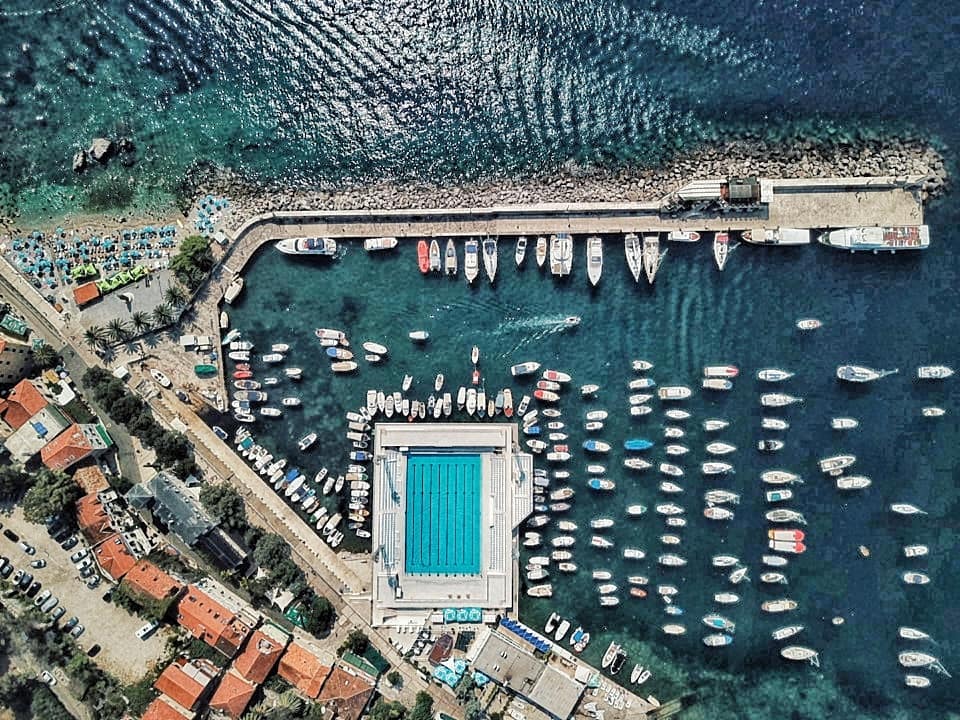
Skver is a kind of informal central place in Herceg Novi.
Everything happens here.
There is the city port and Mulo, there is also a former railway station which testifies that Škver was a favorite place of Herceg Novi in those days.

If someone dares to say that the center of Herceg Novi is Nikola Đurković Square (better known as the Square in front of the Clock Tower), or Belavista (the main square within the old town), he does not know the soul and spirit of Herceg Novi, but judges by logic and it is always defied reality.
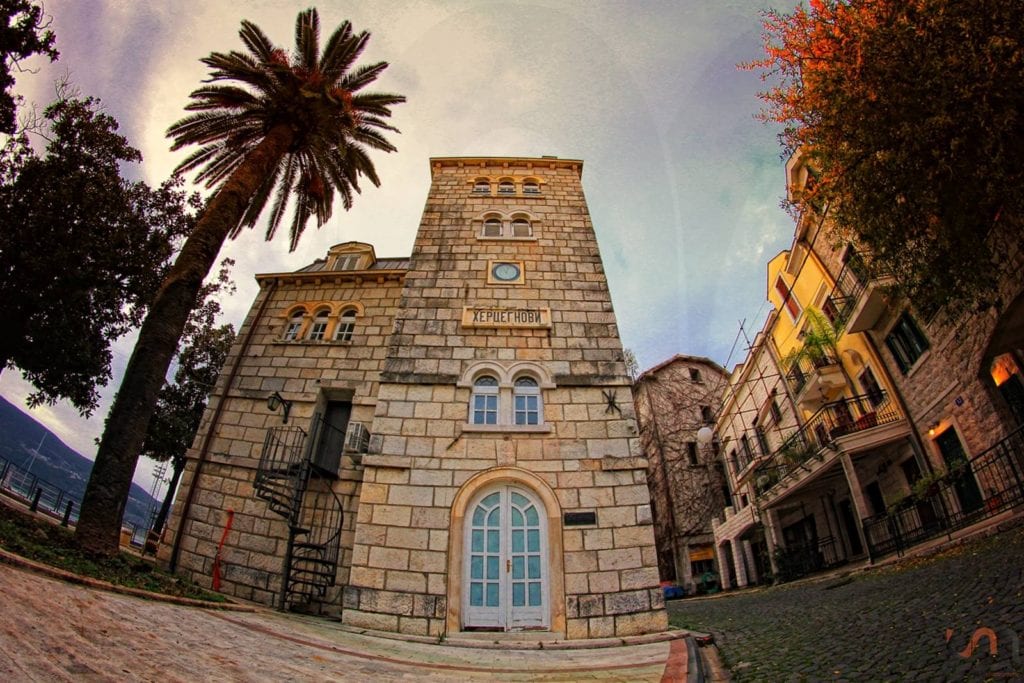
Simply, climb to any other place, e.g. to the “main” square and ask yourself how you feel there and then go down to the Shipyard and ask yourself the same question. You will know that Škver is a special place where the climate and atmosphere are totally different.
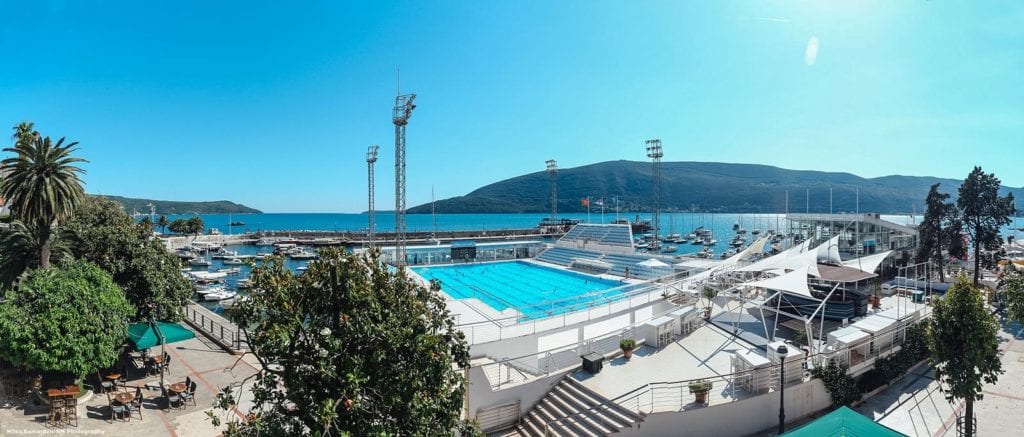
It is not difficult to feel the unique atmosphere that reigns in the Shipyard.
Villa Galeb - Tito's Villa
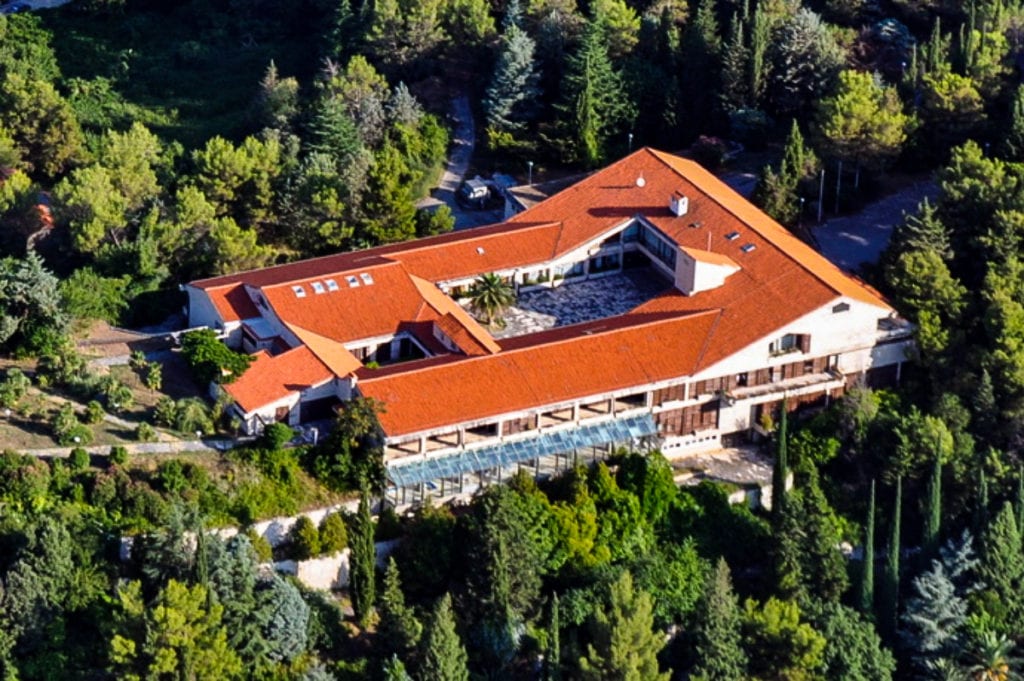
Walking around us on the most beautiful promenade on the Montenegrin coast, we come to Igalo, more precisely to the residence of the former president of SFR Yugoslavia, Josip Broz Tito. Villa “Galeb” or Tito’s villa was built in 1976 and it is part of the Igalo Institute. After years in which this building was closed, inaccessible to the public and rather neglected, it was opened for visits by interested parties in June 2014. It turned out to be a good business move – the villa is interesting to visitors from all over the world.
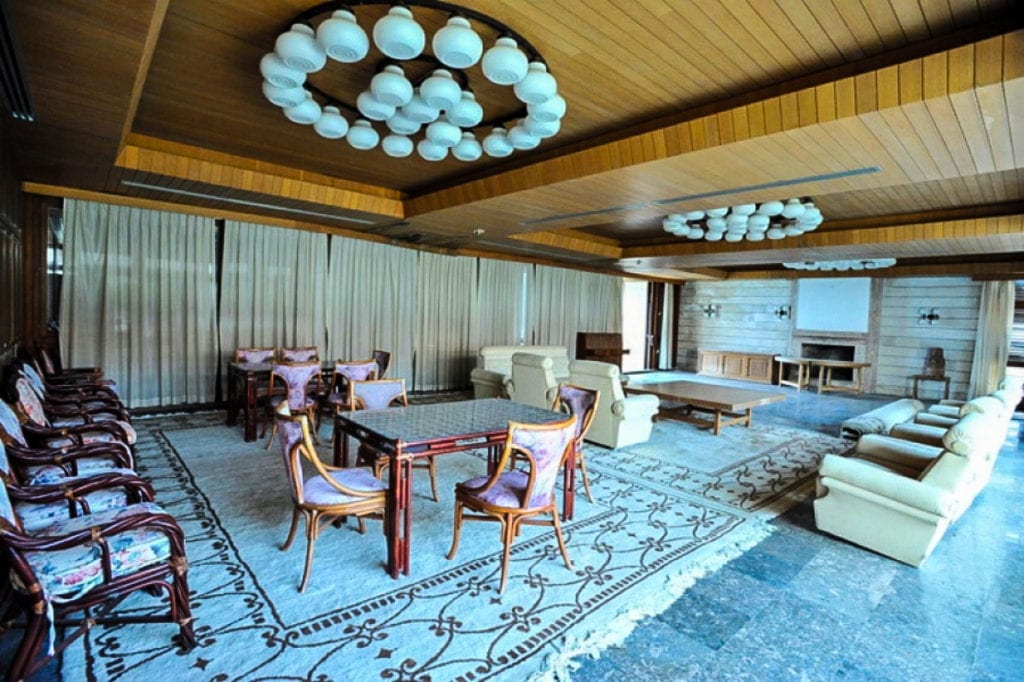
Visitors are able to see the rooms where Tito and his associates and guests held meetings and watched movies. Then the apartments where his close associates stayed, his apartment and the apartment of his wife Jovanka, which are also the most exclusive part of Tito’s villa.
Savina Monastery
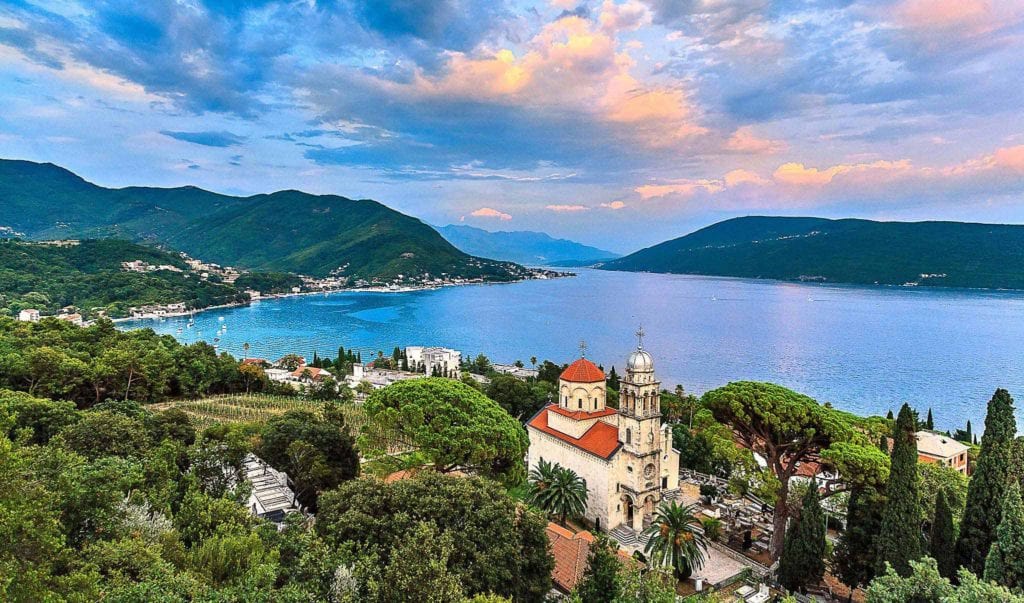
What is not included in this route, and what we sincerely recommend you to visit when you come to Herceg Novi is the SAVINA MONASTERY.
Savina Monastery is located next to Herceg Novi, and was built in lush Mediterranean vegetation on one of the most beautiful parts of the northern Montenegrin coast.
The monastery consists of three churches: the Small Church of the Assumption of the Blessed Virgin, the Great Church of the Assumption of the Blessed Virgin and the Church of Saint Sava, after which the monastery was named.
The small church of the Assumption of the Most Holy Mother of God is very small, only ten meters long and six meters wide. It most probably dates from 1030, although the oldest record in which the monastery is mentioned is from 1648.
Its renovation began at the end of the 17th century, with the arrival of refugee monks from the Tvrdoš Monastery (Herzegovina), and was completed in 1831.
The monastery contains a large number of relics from the time of Nemanjić (relics of Empress Jelena, the cross of Saint Sava), including those transferred from the Tvrdoš monastery.
The great church of the Assumption of the Most Holy Mother of God was built between 1777 and 1799, and was built by master Nikola Foretić from the island of Korčula.
Church of St. Sava is located outside the monastery complex, located on a hill above the konak, and legend has it that it was built by Saint Sava in the 13th century. The monastery was named after him, as well as the whole place where it is located.
Around the church is a gate and a small cemetery with a famous lookout and a view that reaches as far as Lovćen.
The view from this place on the monastery and Boka is magnificent and unforgettable.
In the monastery treasury there are extremely valuable items – exhibits, among which stand out:
crystal cross of St. Sava from the 13th century, the ark of the Tvrdoš Monastery from 1615, the shroud from 1642, the silver pentagram from 1648, a chalice from 1650, the Gospel from 1685, the only portrait of the Russian Tsar Peter the Great,
as well as a series of carved and richly decorated hand and throne crosses.
The monastery library contains a large number of valuable books and documents. In addition to the museum valuables that are exhibited in the treasury, Savina also has a holy, miraculous icon, the Mother of God, called the Virgin of Savina.
This valuable icon is considered miraculous by pious people, regardless of religion. She is credited with saving the monastery when the Venetian captain German, having sailed in galleys under the monastery, wanted to blow it up.
The icon was donated to the monastery by the family of Captain Josif Komnenović from Topla. In addition to this, in the large church there is a small icon of the Mother of God, a contribution of the Russian Empress Catherine the Great.
Beautiful beaches that can be reached by boat:
Rose
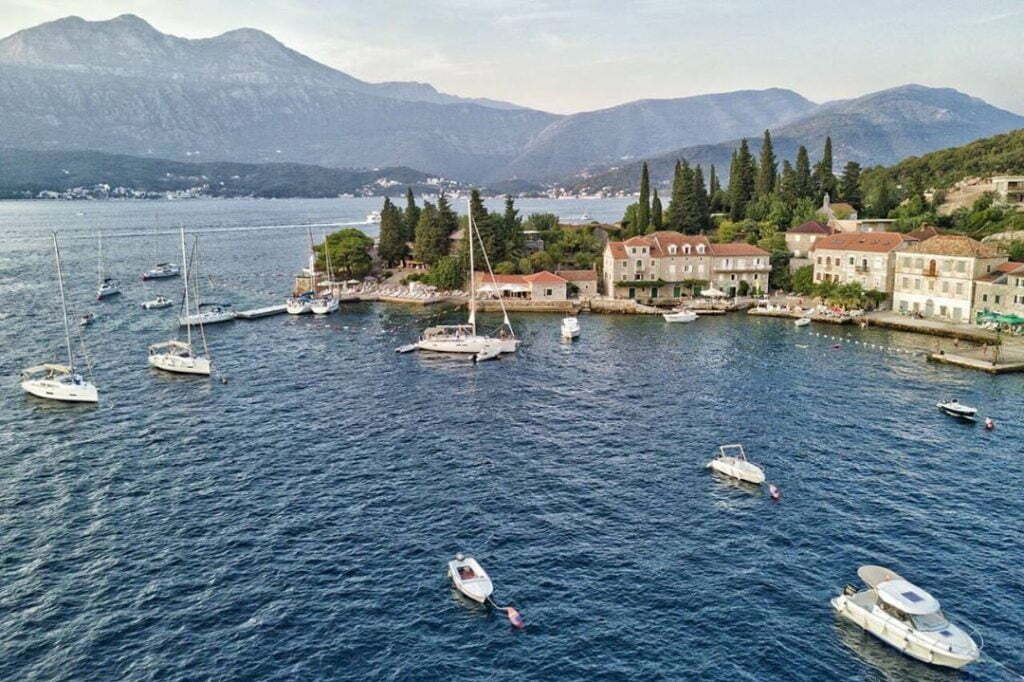
ROSE – a small fishing village on the northwest coast of the Lustica peninsula, opposite Herceg Novi, 1.7 nautical miles away (1 nautical mile = 1852 m). Roses are a typical Mediterranean town with houses packed and lined up in front of the waterfront pier. This used to be the ancient Greek settlement of Punto Rosa, which was destroyed by the Saracens (as Europeans called the Arabs in the Middle Ages) in 867. Since then, Rose has failed to regain her former glory. The significance of Rose is also mentioned in the writings of the Byzantine emperor Constantine the Prophet in 841. Due to its position and protection from the winds, the Roses in the past often served as a shelter for sailing ships, and at one time there was customs and the Port Authority, as well as quarantine for sailors entering Boka. The roses were mostly built in the 17th and 18th centuries, during the golden age of the Boka seafaring, when many people from Lustica sailed their sailboats through the Mediterranean and other seas of the world. In Rosa there is the Orthodox Church of St. Trinity, around which is the cemetery where famous naval captains are buried. There is also the church of St. Our Lady, built in 1783 by the Venetian military leader Antonio Albert. By the way, the whole of Rose, as well as the Lustica peninsula, is burdened with archeological excavations, and hydro-archeological excavations are especially interesting, where cannonballs, anchors, ceramics were found, as well as an old Spanish ship from the beginning of the 16th century. transporting pottery to Bosnian dynasties. The place itself is surrounded by lush Mediterranean vegetation: pines, cypresses, olives, carob… There is a small sandy beach “Malo Rose” near the port, heading north, ideal for those who want to rest and peace and quiet, dreaming past centuries.
Zanjic

ŽANJICA Bay – south of the settlement of Rose, at a distance of about 2.7 nautical miles from Herceg Novi, there is an extremely attractive bay Žanjica, surrounded by old olive groves, lush vegetation and azure blue sea. The beach in the bay is protected from strong waves by Cape Arza; it is over 300 m long and up to 15 m wide, with white pebbles, and it can accommodate over 1000 bathers. In the summer days, the bay can be reached by a regular boat line that runs several times a day, but also by numerous boats that transport lovers to this pristine natural environment. In addition to the small port, on the coast, there are restaurants with typical Mediterranean cuisine, but there are also specialties of continental Montenegrin cuisine. Žanjica Bay is one of the most attractive Herceg Novi picnic areas and beaches, which is becoming more and more popular every year. Right next to the beach is the church of St. Jovana, which dates from 1881, and was built on the ruins of the old church of the same name.
Miriste
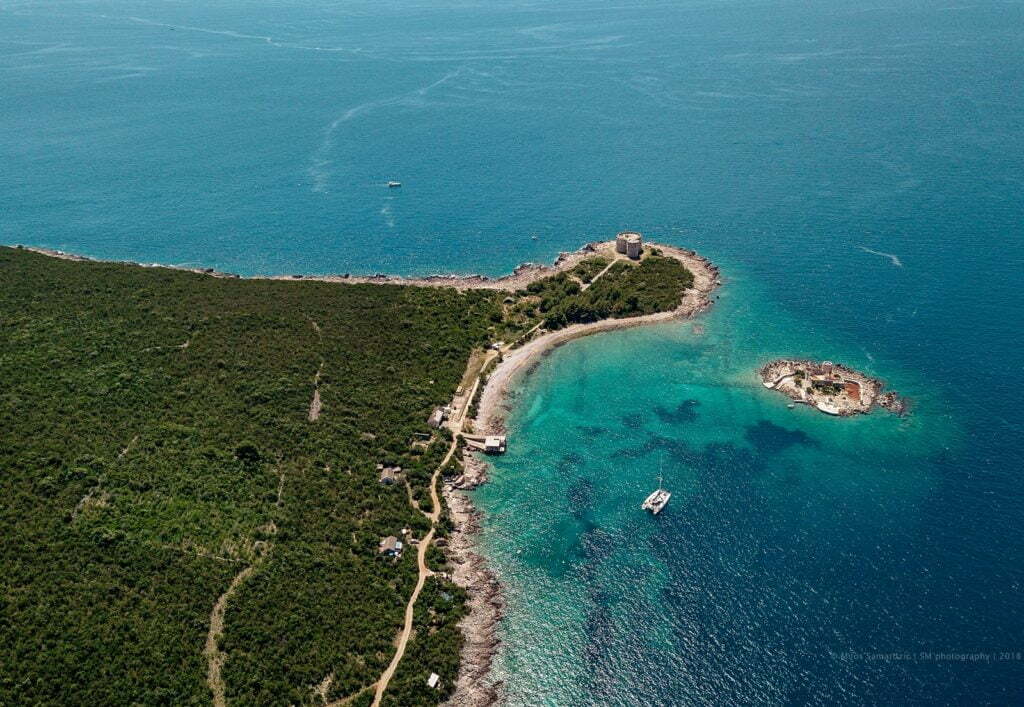
MIRIŠTE Bay – is an inseparable part of this landscape, located between Žanjice and Cape Arza, or the fortress of the same name, in front of which there is a shell-island Žanjica, after which the beach is named.
The island is also called Mala Gospa, and today there is a monastery-church of the Presentation of the Most Holy Mother of God.
Blue Cave
BLUE CAVE – is the most beautiful, most attractive and certainly the most interesting natural creation of this species in the entire Mediterranean. It is located on the Lustica peninsula, between Zlatna luka bay and Cape Mokra gora, about 5.6 nautical miles from Herceg Novi. Under the cliff about 30 meters high, a cave with two openings was created, known by its tourist name Blue Cave, and it is one in a row from the bay Dobreč to the bay Trašte. The higher opening is about 4 m and is located on the southeast side, while the other is much smaller, on the southwest side. Abrasion (sea work) played a crucial role in its formation, so that the interior of the cave is almost round, while the ceiling is in the form of a vault.
From sea level to the top of the ceiling is about 9 m, and the depth of the sea is between 3 and 4 meters. The surface of the cave at sea level is 100 m2. During sunny summer days, and especially before noon, the sun’s rays are reflected from the sea surface and reflected into the interior of the cave, through a small opening, giving the sea a specific shade of blue, as well as the cave vault, which gave it its popular name Blue Cave .
Due to the resonance, the ordinary conversation in the cave turns into an echo.
The Blue Cave is entered by smaller tourist boats, and it is with an unforgettable swim, in the azure blue sea – a special experience to which true lovers of the sea and natural phenomena always return and rejoice.
Mamula Island
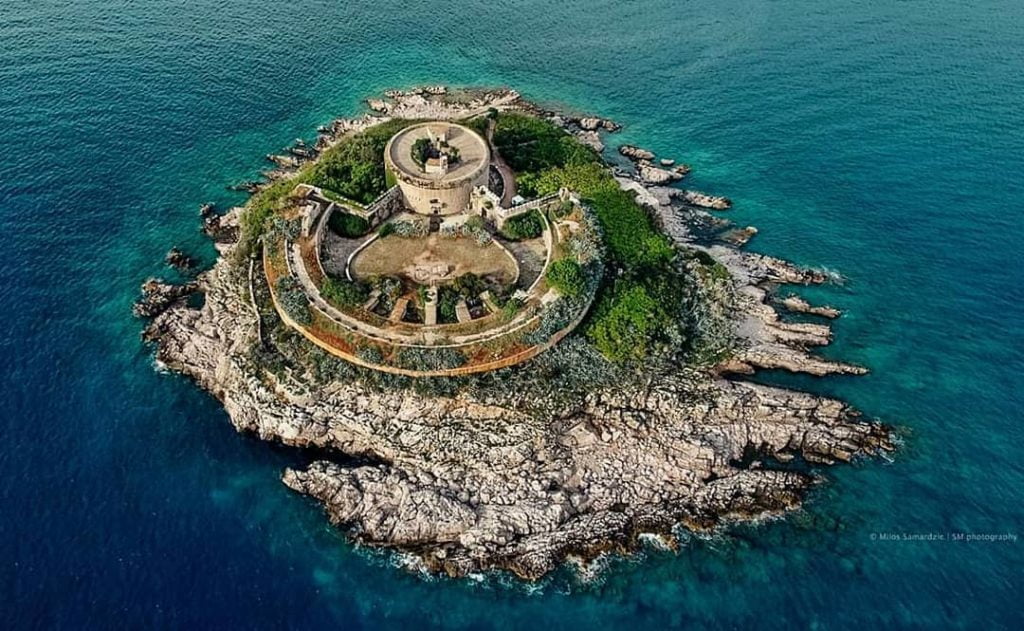
MAMULA Island – is known on nautical charts as Lastavica, while its generally accepted folk name Mamula was named after the Austrian general Lazar Mamula, who established it in the middle of the 19th century. The popular resort of Mamula is an uninhabited island at the entrance to the Bay of Kotor, about 6 km away from Herceg Novi. The island is circular in shape, 200 m in diameter, overgrown with weak and low vegetation, with a beach and a pier for smaller vessels on the north side. During both world wars, there was a prison on this island and a memorial plaque was placed as a sign of remembrance of that period. Several projects have been made for the revival and tourist valorization of this extremely attractive island, but their realization is still ongoing.

Mamula is still an abandoned island, but also a favorite summer resort for many tourists and lovers of unusual places.
We would like to take this opportunity to thank you
Miloš Samardzic in the provided photos. Also, if you want to cooperate with him, you can contact him via the Facebook profile of Samardzic Milos.
If you need adequate accommodation in Herceg Novi, see on our page Apartments Herceg Novi.
Enjoy.